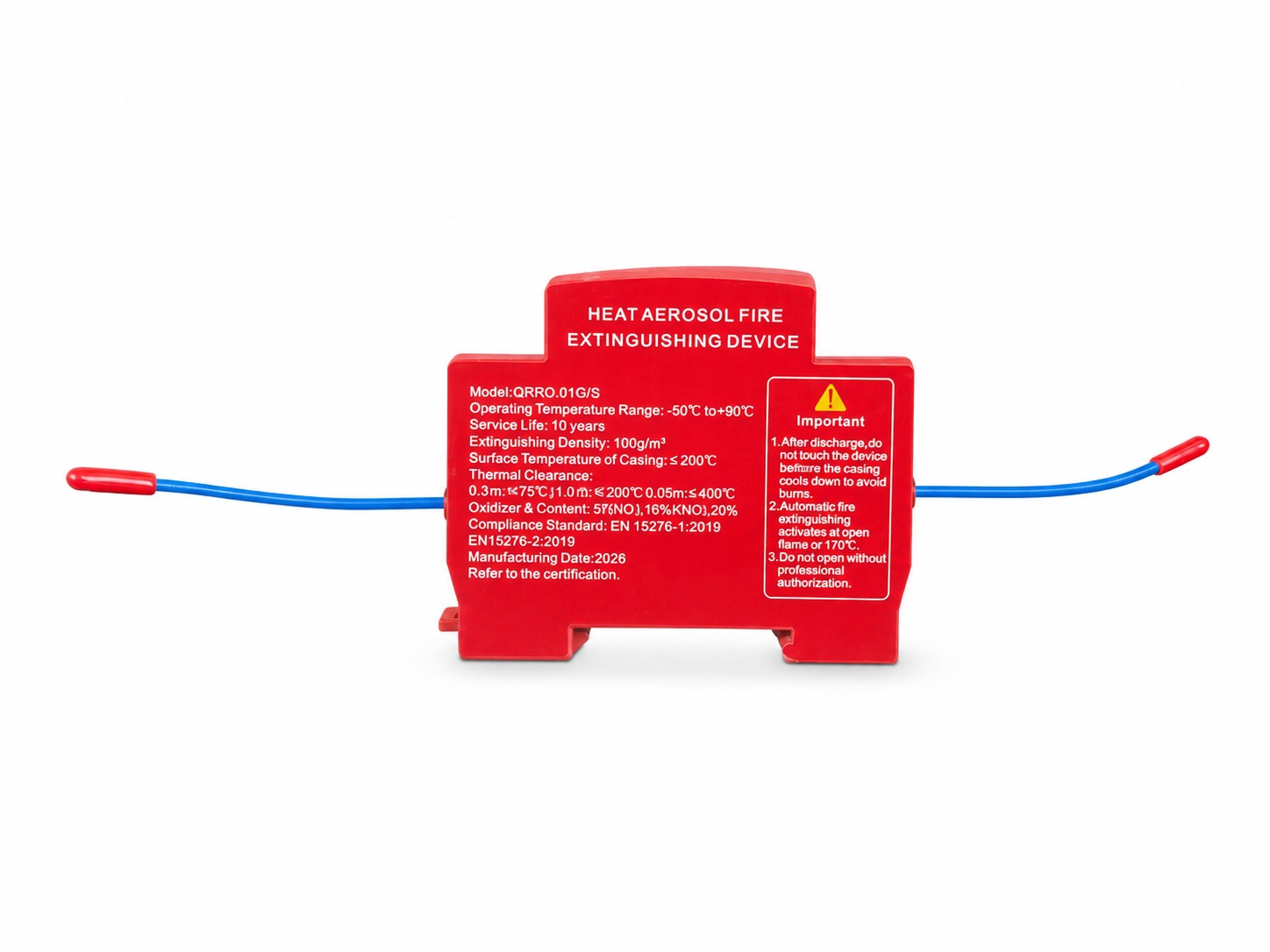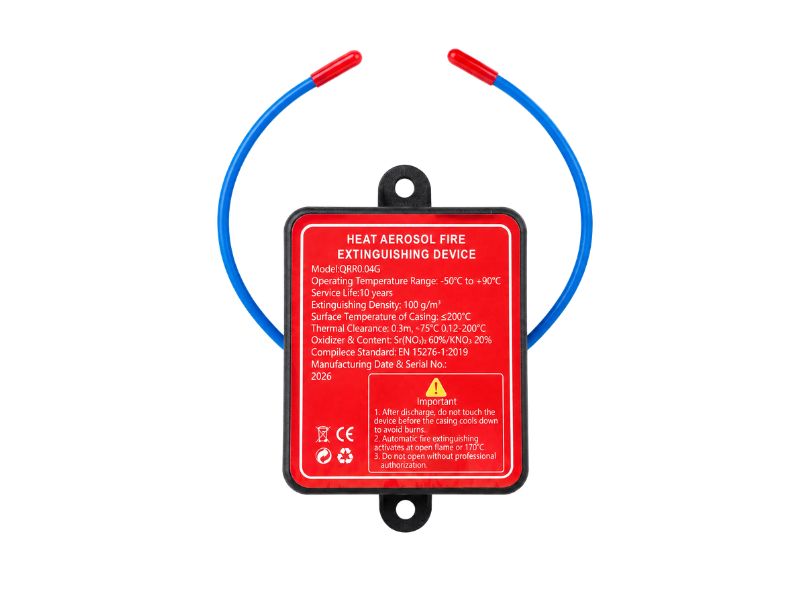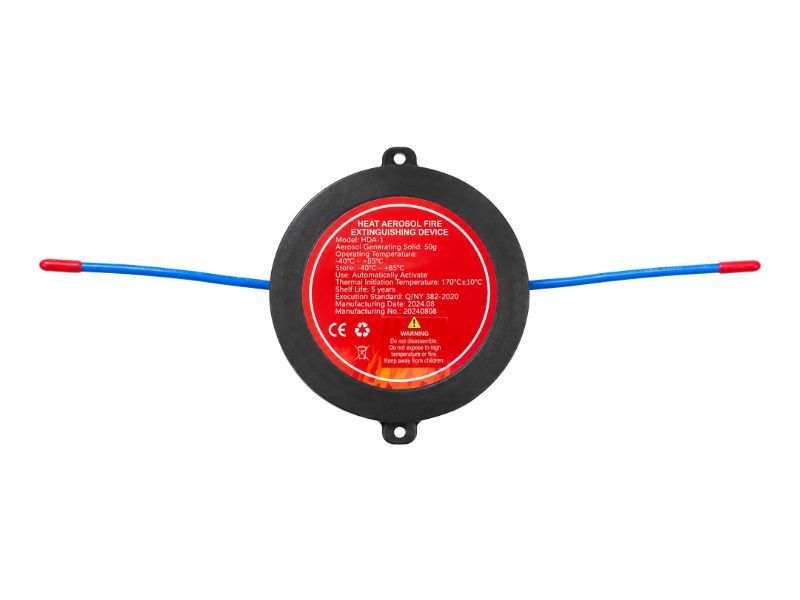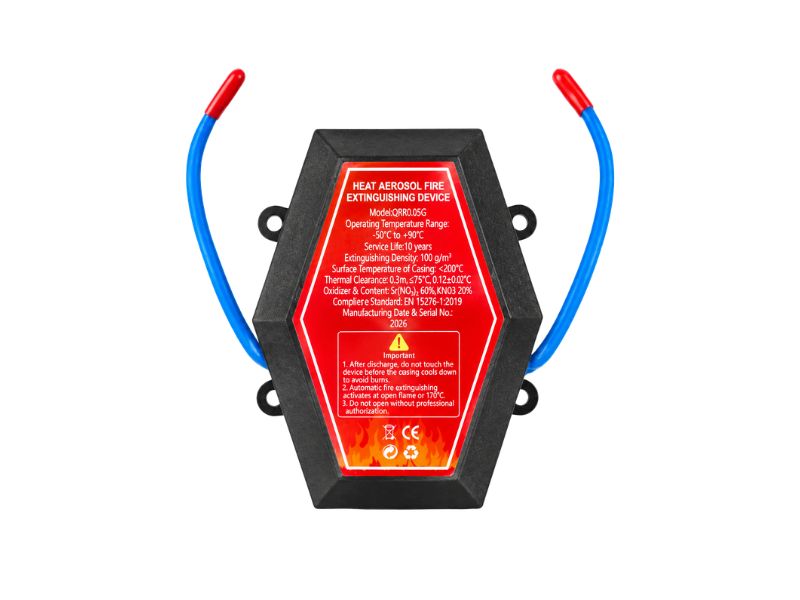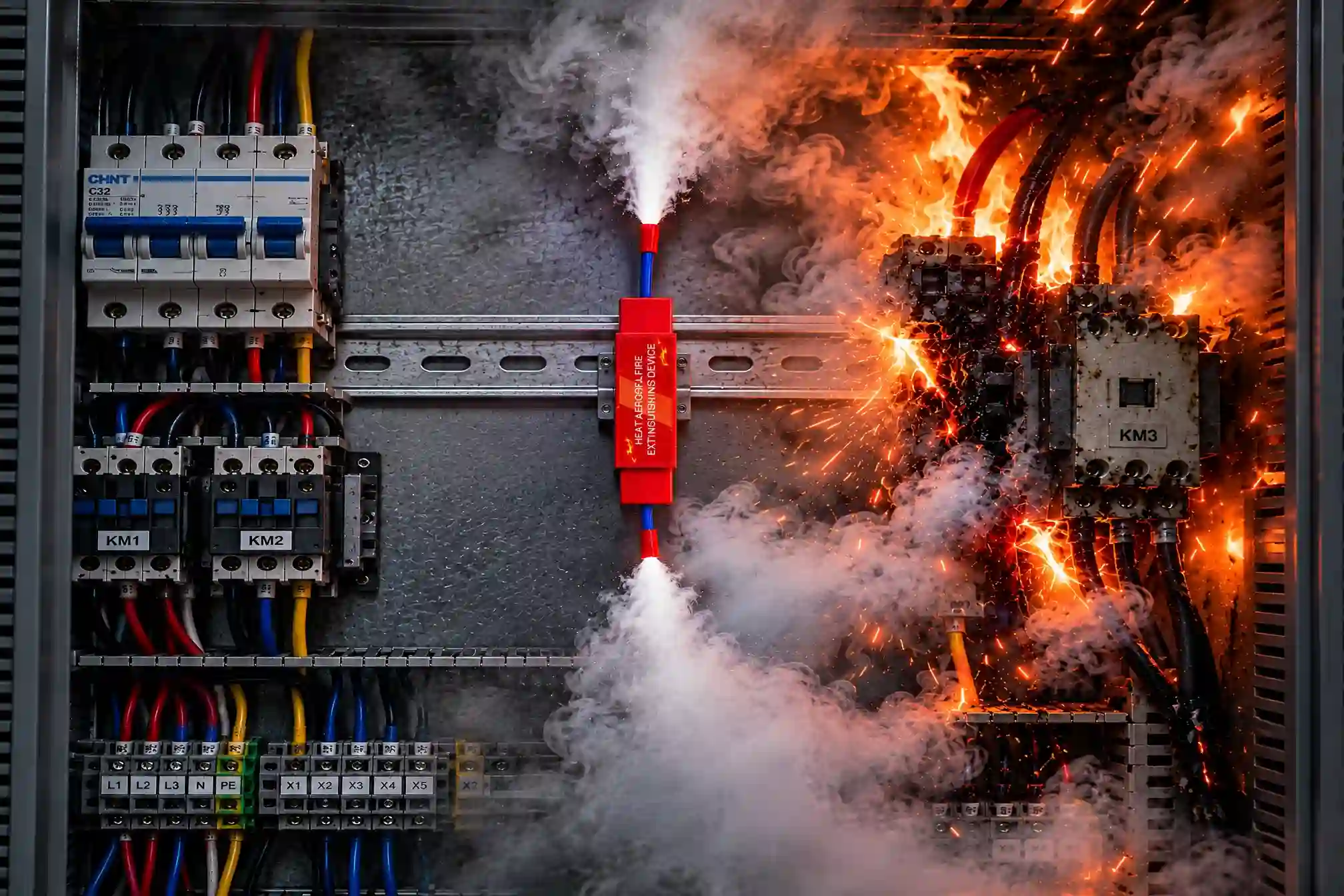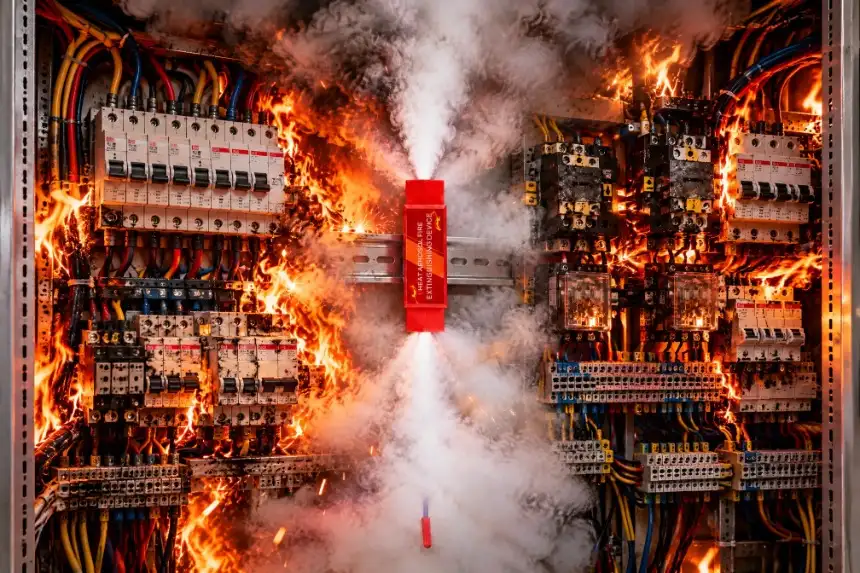
A thermal aerosol fire extinguishing device provides compact, automatic fire suppression for suitable electrical enclosures.
Thermal Aerosol Fire Extinguishing Devices for Electrical Cabinets
Space inside an electrical cabinet fills up quickly. Breakers, contactors, terminals and cable ducts leave little room for additional equipment. Fire protection needs to fit into that space without interfering with the equipment already there.
A thermal aerosol fire extinguishing device provides compact, automatic fire suppression for suitable electrical enclosures. Choosing the right model starts with the cabinet’s internal volume, but ventilation, partitions and installation position also need attention.
Ritchwave offers 10g, 20g, 30g and 40g models, with nominal protection volumes from 0.1 to 0.4 m³. These devices activate at approximately 170°C and have a specified service life of 10 years under the required storage and operating conditions, including protection from moisture.
How does a thermal aerosol fire extinguishing device work?
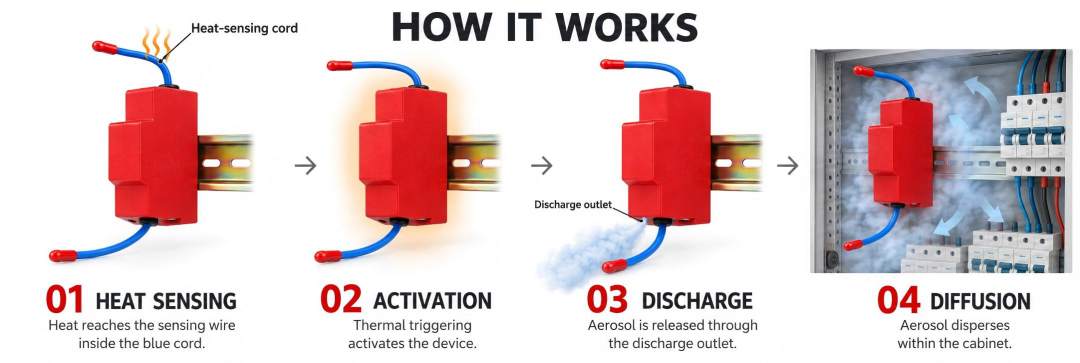
A condensed aerosol device contains a solid aerosol-forming compound. When activated, the compound produces fine particles suspended in gases. Common potassium-based aerosol systems suppress flames mainly by interrupting the chemical reactions that keep combustion going.
The visible discharge may resemble smoke, but it is an extinguishing aerosol. It is not simply a gas, and condensed aerosol should not be described as a residue-free extinguishing agent.
In a thermally activated device, a heat-sensitive element initiates discharge when its specified activation conditions are reached. The device then releases aerosol through its outlets into the protected enclosure.
You may see this product described as a heat aerosol fire extinguisher, automatic aerosol fire extinguisher or thermal aerosol fire extinguishing device. When comparing products, check the activation method and technical specifications behind the name.
Which model do you need?
Ritchwave’s four models cover nominal enclosure volumes of 100 to 400 litres.
| Model | Nominal protection volume | Activation temperature | Specified service life |
|---|---|---|---|
| 10g | 0.1 m³ / 100 litres | Approximately 170°C | 10 years |
| 20g | 0.2 m³ / 200 litres | Approximately 170°C | 10 years |
| 30g | 0.3 m³ / 300 litres | Approximately 170°C | 10 years |
| 40g | 0.4 m³ / 400 litres | Approximately 170°C | 10 years |
These product specifications are supplied by Ritchwave. Nominal protection volumes are based on an agent loading of 100 g/m³ for suitable enclosed applications. The service-life specification requires compliance with the product’s storage and operating instructions, including protection from moisture.
To calculate your cabinet’s internal volume, use:
Volume = internal height × internal width × internal depth
Convert all measurements to metres first. For example, a cabinet measuring 600 × 400 × 250 mm internally has a volume of:
0.6 × 0.4 × 0.25 = 0.06 m³, or 60 litres.
By volume alone, this falls within the 10g model’s nominal 0.1 m³ range. The next step is to check whether the enclosure and installation conditions are suitable.
A cabinet with an open interior is different from one divided into separate compartments. A larger device in one compartment does not automatically protect a second compartment behind a solid barrier.
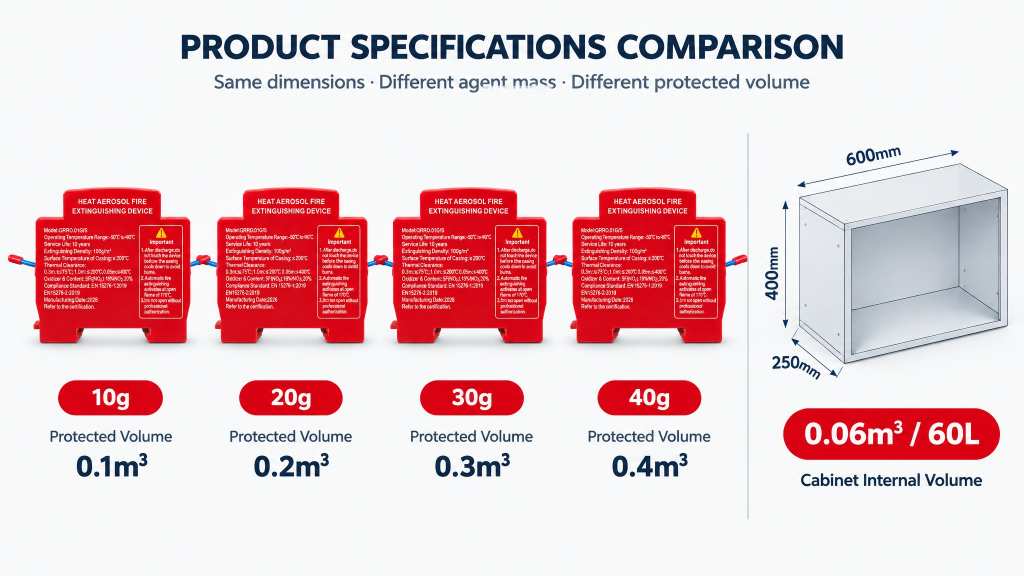
Nominal protection volumes for suitable enclosed applications.
Check ventilation before choosing a device
What does the 170°C activation temperature mean?
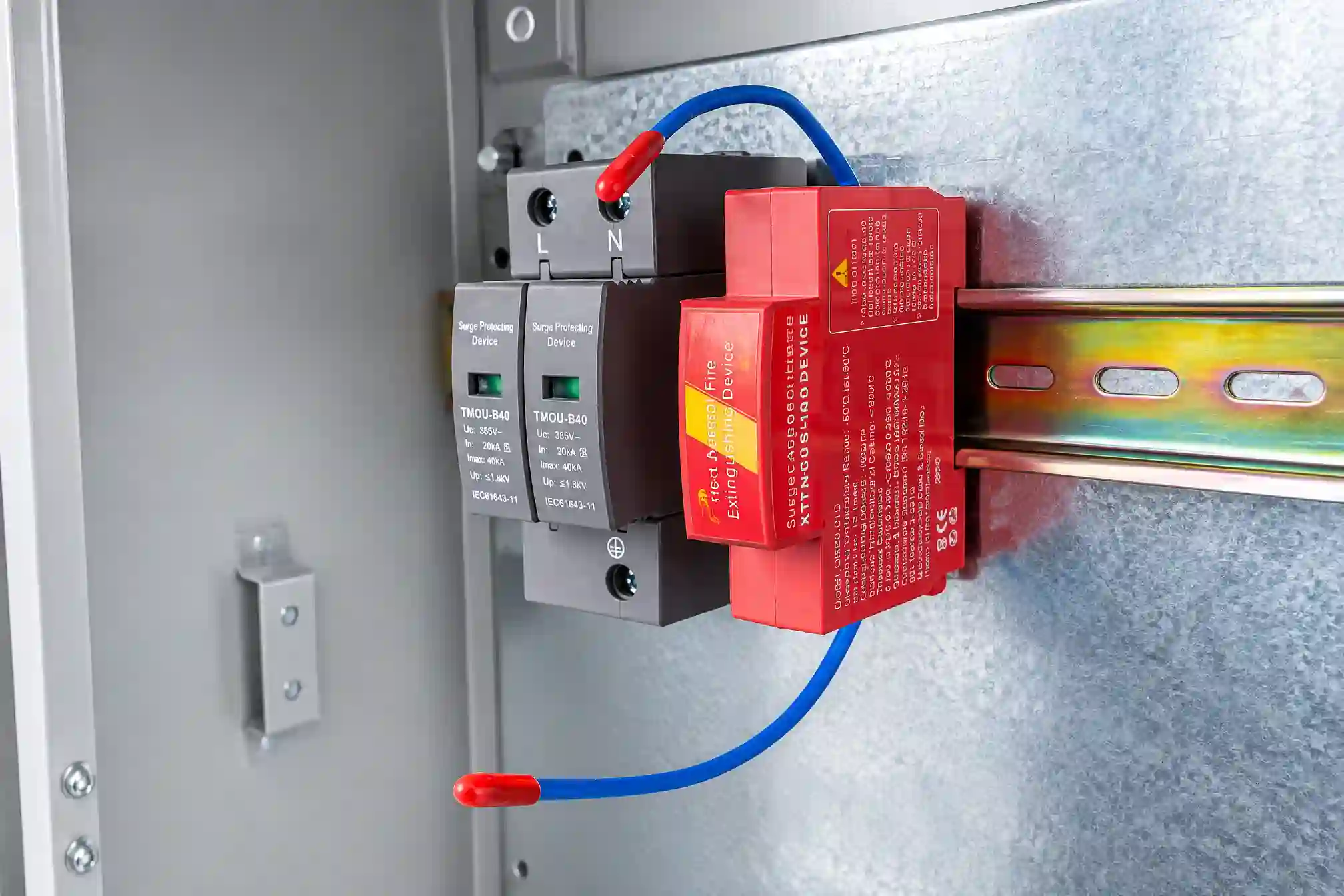
Where should a DIN rail aerosol device be installed?
DIN rail mounting makes attachment convenient, but the nearest empty section of rail may not be the right position.
Check the model’s installation instructions for mounting orientation and required clearances. Discharge outlets need an unobstructed path and the specified space around them. Cable ducts, wiring bundles and adjacent components can affect whether a position is suitable. Manufacturer installation literature treats mounting configurations and clearance zones as model-specific requirements.
Before fitting the device, check:
- The rail and mounting clip provide secure attachment.
- The outlets have the clearance required by the instructions.
- The thermal sensing element can be positioned correctly.
- The installation does not interfere with electrical clearances or maintenance access.
- The position is protected from dripping water and condensation.
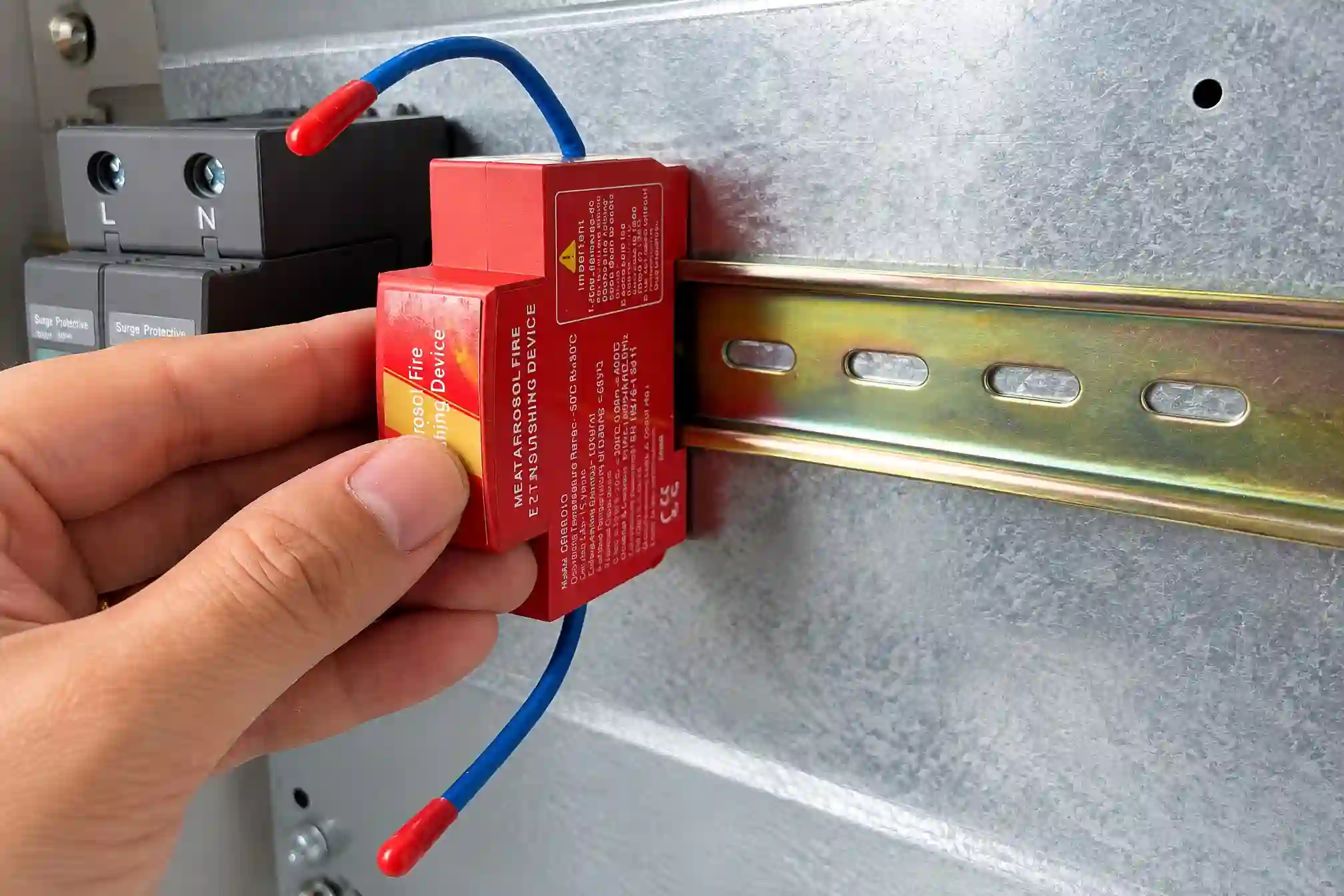
DIN rail mount / Discharge outlet / Thermal sensing element
Will aerosol leave residue on electrical equipment?
Condensed aerosol can leave fine particulate residue after discharge. That should be discussed before purchase, especially where a cabinet contains sensitive electronics.
FirePro’s published guidance explains that settled aerosol particles can absorb moisture over time, making removal more difficult. Cleaning procedures should therefore be agreed for the selected product and the equipment being protected.
Ask for a written post-discharge procedure. A useful procedure should cover access to the affected enclosure, cleaning, inspection and replacement of the discharged device.
Putting out the fire does not mean the cabinet is ready to restart. The original fault and any fire damage still need to be assessed before electrical equipment returns to service.
A 10-year service life requires protection from moisture
Ritchwave thermal aerosol devices have a specified service life of 10 years under the required storage and operating conditions. Protection from moisture is part of those conditions.
An enclosure may keep out rain and still develop condensation inside. Before installation, look for droplets, water marks, damaged door seals and moisture around cable entries. If the cabinet regularly becomes damp, address the cause before installing the device.
Store unused units in their original packaging in a dry area. Keep them away from water exposure during storage, transport and installation.
During routine cabinet inspections, check the device for:
- Moisture exposure or corrosion.
- Physical damage or loose mounting.
- Obstructed discharge outlets.
- Damage to the thermal sensing element.
- Changes to the surrounding cabinet layout.
Keep the manufacturing and installation dates in your records, and follow the manufacturer’s stated replacement schedule. Replace the device after activation.
What should buyers check before placing an order?
Start with the exact model being quoted. The product label, datasheet and supporting documents should identify the same model.
For a sample or bulk order, request the following:
| Document or detail | What to check |
|---|---|
| Product datasheet | Model, protection volume, activation specification and operating conditions |
| Installation instructions | Mounting method, clearances and sensing-element positioning |
| Fire-test documentation | Tested model, application and test conditions |
| Applicable certificates or listings | Issuer, validity and covered models |
| Safety data sheet | Handling, storage and relevant safety information |
| Transport documents | Information applicable to the shipment and transport method |
| Service-life and warranty terms | Replacement schedule, conditions and warranty coverage |
For OEM orders, agree on the label and packaging before production. Branding changes should preserve clear model identification, batch information and operating instructions.
Frequently asked questions
Can one 40g device protect several separate compartments?
Its nominal protection volume is 0.4 m³, but separate compartments require assessment of how aerosol reaches each space. Do not assume that adding their volumes together makes one installation sufficient.
Can it connect to a fire alarm panel?
Only if the selected model and control arrangement support that function. Request the approved connection details. A thermal sensing cord should not be treated as an electrical alarm connection.
Is the 10-year service life the same as a 10-year warranty?
No. Service life describes the specified usable period under the required conditions. Warranty coverage is a separate commercial term and should be confirmed in the quotation.
Can the device be moved into another cabinet?
The new cabinet needs its own selection and installation check. Dimensions, ventilation, internal barriers and available clearances may differ, even if the device physically fits.
What determines the price?
The selected model, order quantity, packaging, OEM requirements and supplied accessories affect the quotation. Compare offers with the same scope and confirm which technical documents are included.
Send us your cabinet details
- For a product enquiry, send Ritchwave:
- Internal cabinet dimensions.
- Clear photographs of the interior.
- Details of fans, ventilation openings and partitions.
- Installation environment, including any moisture or condensation.
- Required quantity and destination market.
- OEM label or packaging requirements, if applicable.
If you already have a preferred 10g, 20g, 30g or 40g model, include it in your enquiry. With the cabinet details available, we can discuss the product options and prepare a quotation with a clear scope.
Thermal Aerosol Fire Extinguishing Device
Questions about your application?
Explore our fire safety products, or contact our team to discuss product specifications and your requirements.
Contact our team